In the quiet hum of everyday life, a subtle yet powerful phenomenon unfolds across dinner tables worldwide, one that operates beneath the radar of conscious awareness. Unconscious eating, particularly as influenced by the size of our servingware, represents a fascinating intersection of psychology, design, and nutrition. For decades, researchers have been piecing together how something as seemingly innocuous as the diameter of a plate or the depth of a bowl can dramatically alter consumption patterns, often without the diner ever realizing the manipulation at play.
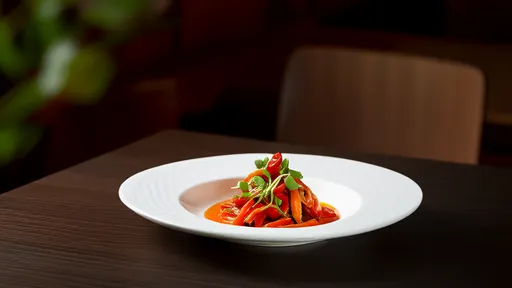
The concept hinges on a cognitive illusion known as the Delboeuf illusion, first identified in the 19th century by Belgian philosopher Franz Delboeuf. In its classic form, the illusion demonstrates that a circle appears smaller when surrounded by a larger ring and larger when enclosed by a smaller one. Translating this to the dining context, a identical portion of food appears more substantial on a small plate, tricking the brain into perceiving it as adequate or even generous. On a larger plate, that same serving can look meager, prompting individuals to serve themselves more to achieve visual satisfaction. This isn't merely about aesthetics; it's a fundamental misperception that bypasses logical assessment of hunger and satiety.
This visual trickery is compounded by what psychologists term unit bias. Humans have a innate tendency to perceive a single unit—one plate, one bowl, one package—as the appropriate amount to consume, regardless of its actual volume. We are conditioned to clean our plates, a mantra ingrained from childhood that often overrides the body's internal signals of fullness. When that plate is larger, the "unit" is inherently bigger, and we feel compelled to consume it all, leading to a significant and unconscious increase in caloric intake. The plate becomes a visual guide for consumption, not a vessel for food.
The evidence supporting this is both robust and alarming. A seminal study published in the American Journal of Preventive Medicine demonstrated that individuals using large bowls served themselves and consumed 31% more food than those using smaller bowls, all while believing their portion size was no different. Another series of experiments showed that even nutrition experts, when given larger bowls, served themselves over 15% more without any awareness of doing so. This suggests that knowledge and expertise are poor defenses against this deeply ingrained cognitive bias.
Beyond the plate, the shape and color of our tableware also play crucial roles. Studies indicate that people serve less onto plates that have a high color contrast with the food being served. For instance, pasta with Alfredo sauce on a white plate becomes visually indistinct, making portion size difficult to judge, leading to larger servings. On a dark plate, the same pasta is clearly delineated, allowing for better visual assessment and typically smaller servings. Similarly, tall, slender glasses are perceived to hold more liquid than short, wide glasses of identical volume, influencing how much we pour and drink.
The implications of this unconscious eating extend far beyond the individual, rippling into public health and the global obesity epidemic. In a food environment where portion sizes have ballooned and large plates have become the restaurant standard, consumers are constantly nudged towards overconsumption. The dinnerware industry, often promoting larger sets as more generous or better value, inadvertently contributes to the problem. This creates an environment where making the healthy choice requires constant, conscious effort against a backdrop designed to encourage excess.
However, this knowledge also presents a simple and powerful tool for intervention. The solution requires no drastic diets, expensive programs, or immense willpower. It is elegantly simple: use smaller plates, bowls, and utensils. By downsizing dishware, individuals can leverage the cognitive bias to their advantage, allowing the Delboeuf illusion to work in favor of moderation. A standard serving looks satisfying on an 8-inch plate but gets lost on a 12-inch one. This small environmental change can lead to a sustained reduction in calorie intake without feelings of deprivation or hunger.
This approach to mindful environmental design is gaining traction in the field of behavioral economics and nudge theory. By understanding the heuristics and biases that guide human behavior, we can design choice architectures that make healthy decisions the default easy option. Making smaller plates more accessible and normative is one such nudge. Some researchers and public health advocates have even proposed standardizing plate sizes in restaurants or adding visual cues, like portion size markers, to help recalibrate our distorted perceptions.
Ultimately, the relationship between plate size and consumption is a profound reminder of how our environment shapes our behavior in ways we are blind to. It challenges the notion of the purely rational consumer, highlighting instead a creature of perception, heavily influenced by context and visual cues. By bringing this unconscious process into conscious awareness, we empower ourselves to make subtle changes with dramatic effects. The battle for healthier eating may not be fought with willpower alone, but with wiser choices in the tools we use to eat, turning the table on cognitive bias and taking back control, one small plate at a time.

By /Aug 29, 2025

By /Aug 29, 2025

By /Aug 29, 2025

By /Aug 29, 2025

By /Aug 29, 2025

By /Aug 29, 2025

By /Aug 29, 2025
By /Aug 29, 2025

By /Aug 29, 2025

By /Aug 29, 2025

By /Aug 29, 2025

By /Aug 29, 2025

By /Aug 29, 2025

By /Aug 29, 2025

By /Aug 29, 2025

By /Aug 29, 2025

By /Aug 29, 2025

By /Aug 29, 2025

By /Aug 29, 2025

By /Aug 29, 2025
